📚 Updated for 2026 · Expert Parent Guide
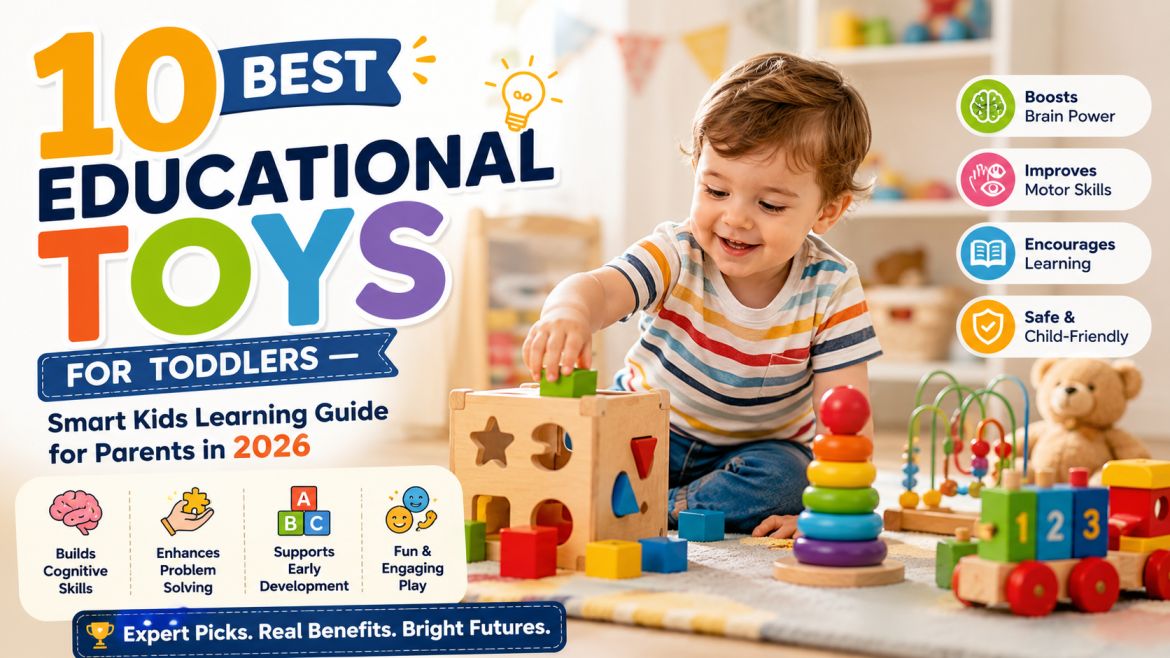
Toys for Toddlers With Smart Kids Learning Guide for Parents in 2026
Tested, reviewed, and parent-approved picks that actually build your child’s brain — not just their toy box.
👩👧 Written by Parent Experts🕒 12 min read📅 Updated May 2026✅ 100% Research-Backed
Educational Toys Matter More Than Ever in 2026
Every parent wants a smarter, happier, more curious child. But standing in the toy aisle — or scrolling through a thousand Amazon results at midnight — can feel completely overwhelming. Which toy is actually worth the money? Which one ends up collecting dust under the bed three days after Christmas?
“The right toy at the right age doesn’t just entertain a toddler — it rewires how their brain approaches problems for the rest of their life.”
In 2026, the market for kids’ educational toys is bigger and noisier than ever. Brands are slapping the word “educational” on everything from foam blocks to $200 robot kits. That’s why we put together this honest, no-fluff guide — comparing real products based on what child development research actually says works.
Whether you’re shopping for a curious 18-month-old who puts everything in their mouth, or a sharp 5-year-old who’s already asking how computers work — this list has exactly what you need.
How We Chose These Toys
Our team reviewed over 60 products across categories. Each toy was evaluated on: age appropriateness, developmental benefit, parent reviews, safety certification , value for money, and durability. We specifically excluded any toy that was “educational” in name only.
1- Why Educational Toys Matter More Than Ever in 2026
We live in a world drowning in screens. The average toddler in the US now encounters a touchscreen before their first birthday. In the UK and GCC countries, mobile device exposure among under-5s has reached record levels.
A 2025 study from the American Academy of Pediatrics confirmed that children who engage with physical educational toys for at least 30 minutes a day show stronger language development, better fine motor control, and higher problem-solving ability by age six compared to children with primarily passive screen time.
This isn’t about being anti-technology. It’s about understanding that a wooden stacking toy teaches a 2-year-old about gravity, balance, cause and effect, and frustration management — all at once — in ways a touchscreen game simply cannot replicate at that stage of development.
In 2026, the best parents aren’t choosing between smart and fun. They’re finding toys that are both.
Did You Know?
The global educational toy market is growing at over 10% per year. But only about 30% of toys labeled “educational” are backed by any genuine developmental research. This guide only includes toys with proven developmental benefits.
2- What Should You Look For in a Good Educational Toy for Toddlers?
Before we jump into the list, here’s a quick framework that child development experts call the “4 Open Doors” of a truly great educational toy:
Open-Ended Play Possibilities
The best toys don’t have one “right” way to play. LEGO bricks, stacking cups, sand, and building blocks all fall into this category. When a toy can be used in 100 different ways, it grows with your child’s imagination instead of going stale in a week.
Age-Appropriate Challenge
Too easy? Your toddler loses interest in 10 minutes. Too hard? Frustration and meltdown. The sweet spot is what psychologist Lev Vygotsky called the “zone of proximal development” — something your child can almost do on their own but needs a little stretching to achieve.
Multi-Sensory Engagement
Toddlers learn through all five senses. Toys that combine touch, sight, sound, and movement create richer neural connections than single-sense experiences. Think texture boards, musical instruments, and sensory bins.
Social or Parent Interaction Potential
The single biggest predictor of a toddler’s development isn’t the toy itself — it’s the adult talking and playing alongside the child. The best educational toys invite parents in rather than replacing them.
3- Top 10 Best Educational Toys for Toddlers in 2026
LEGO DUPLO Classic Brick Box
Age: 1.5 – 5 years
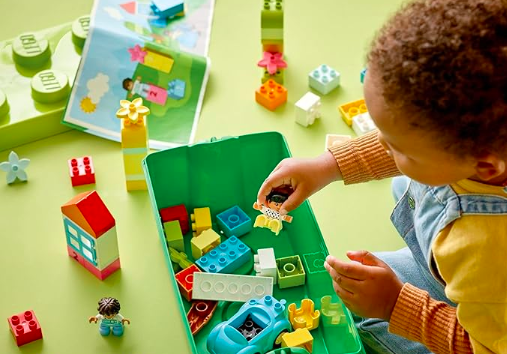
If there is one toy every toddler needs in 2026, it is this one. DUPLO bricks are the gold standard of open-ended educational play — and they have been for over 50 years for very good reason. The oversized, toddler-safe bricks snap together satisfyingly, come apart easily (no frustrated tears), and build everything from a simple tower to a full city once your child’s imagination kicks in.
What makes this the number one pick is not just the bricks themselves — it is the type of thinking they build. Every time a toddler stacks, balances, and plans their next move, they are exercising spatial reasoning, a skill that researchers link directly to later math and engineering ability. This is the toy that grows from age 18 months all the way to age 5, and it never gets old.
✅ Why parents love it
- Develops spatial reasoning & creativity
- Toddler-safe large bricks, no choking risk
- Compatible with all DUPLO sets — expandable
- Lasts for years, great resale value
- Quiet play — parents’ ears will thank you
❌ Worth knowing
- Plain bricks may need story prompts from parents
- Pieces scatter — a storage box helps
Parent Verdict: “My son is 3 and he plays with these every single morning. I have ever spent on a toy. He builds zoos, houses, spaceships — his imagination runs wild.” — Sarah, mum of 2, UK
Osmo Genius Starter Kit
Age: 3 – 5 years
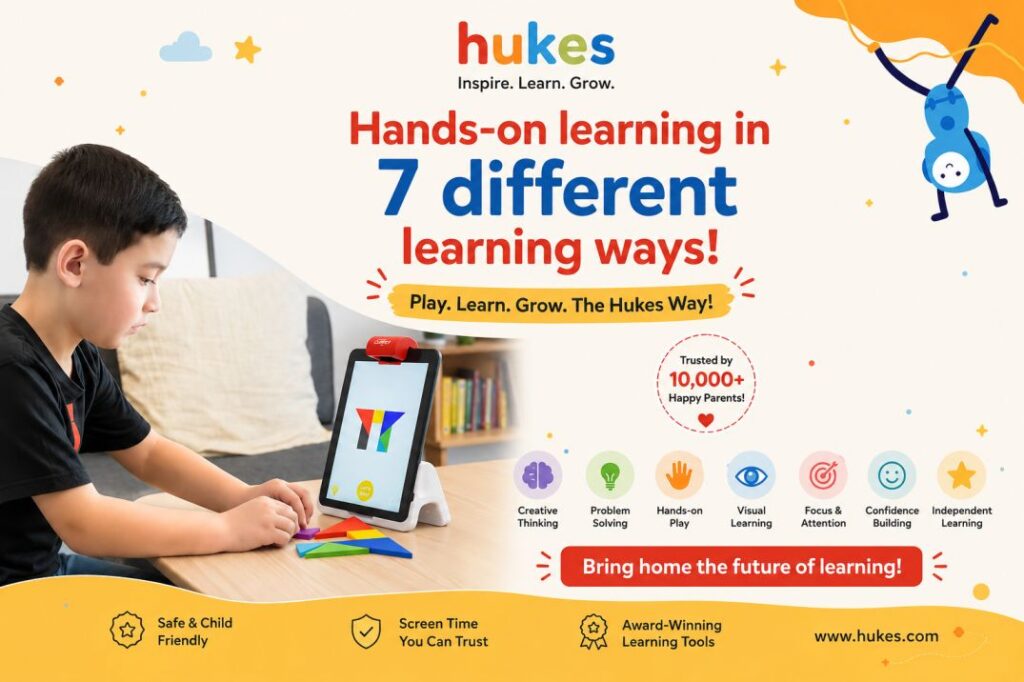
Osmo is the rare product that genuinely earns the label “educational technology.” It bridges the physical and digital worlds brilliantly — children use real, tangible pieces on a table, and the iPad camera recognises what they are doing to create an interactive learning experience. It is one of the most-searched kids’ learning toys in the USA and UK in 2026 for very good reason.
The kit covers numbers, letters, drawing, and problem solving. Parents consistently report that their children who resist traditional learning — worksheets, flashcards — are completely engaged with Osmo for 45 minutes at a stretch. That is enormous for a toddler’s attention span.
✅ Why parents love it
- Covers maths, reading, creativity & coding
- Physical pieces = no screen-only dependency
- Adapts difficulty to child’s level automatically
- Used in 30,000+ schools worldwide
❌ Worth knowing
- Requires an iPad (not included)
- Price point (~$69)
Parent Verdict: “My daughter hates worksheets but will do Osmo maths for an hour. Her teacher noticed the improvement within one month.” — James, dad of 1, USA
Melissa & Doug Alphabet Puzzle
Age: 2 – 4 years
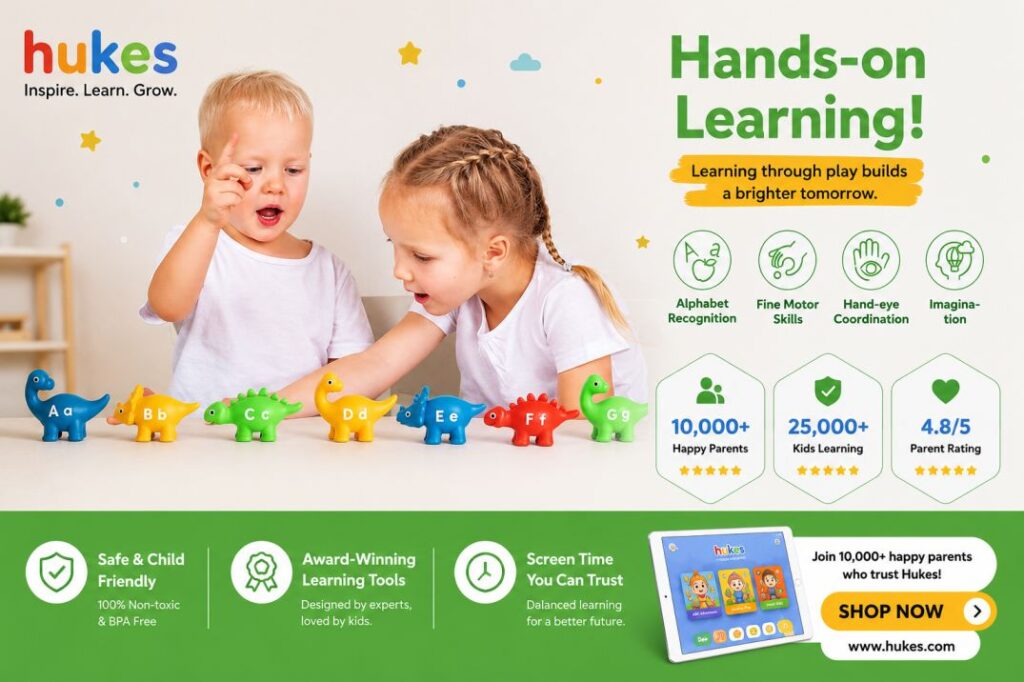
Montessori-style learning is having a massive moment in 2026 — and for good reason. The core idea is simple: give children beautiful, real-world materials that they can handle, explore, and master at their own pace. Melissa & Doug has been the trusted name in wooden Montessori-inspired toys for decades, and their alphabet puzzle is a masterclass in simplicity done right.
Each letter is brightly coloured, chunky enough for small hands, and fits into its own shaped slot. Children naturally begin to connect the shape of a letter, its name, and eventually its sound — the foundation of reading — without a single flashcard. This is exactly the kind of toy a child development expert would put in every toddler’s home.
✅ Why parents love it
- Builds early literacy foundation naturally
- Premium wood — safe, durable, non-toxic paint
- Develops fine motor control & hand-eye coordination
- Very affordable under $30
❌ Worth knowing
- Letters can be lost — store carefully
- Best with parent engagement at first
Parent Verdict: “My 2-year-old learned all 26 letters in 6 weeks just playing with this. Simple, brilliant toy.” — Fatima, mum of 3, UAE
kids Music Player / (Audio)
Age: 3 – 8 years
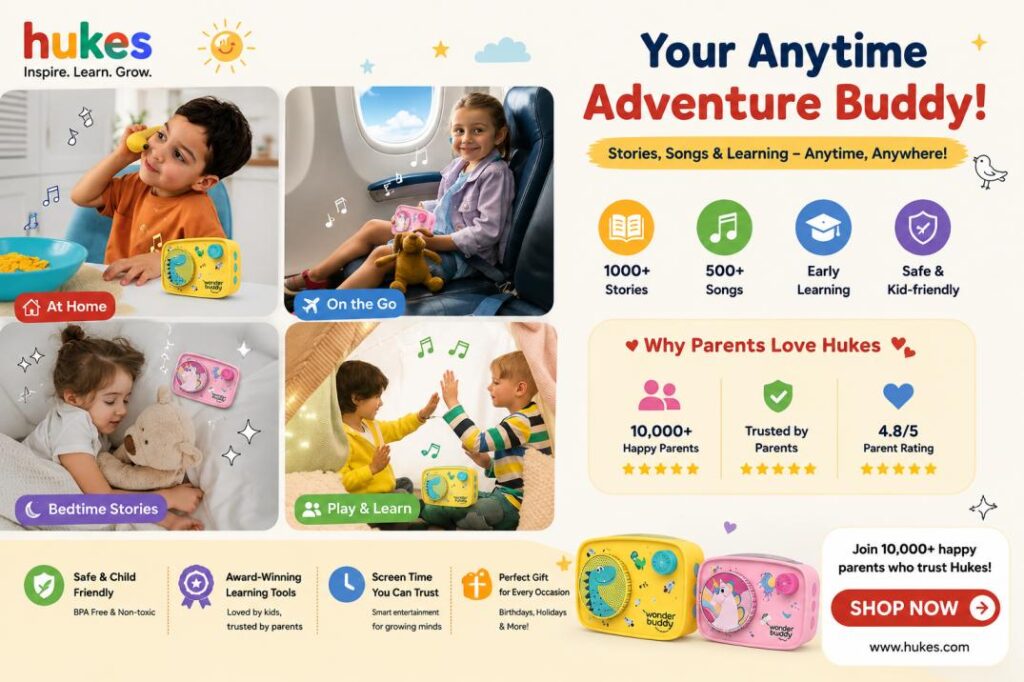
The screen free parenting movement is one of the biggest trends of 2026. This beautifully designed device plays audio stories, podcasts, and learning content through physical cards that children insert themselves. No screens, no algorithms, no accidental YouTube rabbit holes.
What makes it genuinely educational is the nature of the content — children listening to stories develop vocabulary at 2–3 times the rate of those who don’t. Auditory processing is one of the most underrated aspects of toddler brain development, and Yoto builds it beautifully while giving children the independence to choose their own story — a huge confidence builder.
✅ Why parents love it
- Zero screen time — parent anxiety solved
- Builds vocabulary & listening comprehension
- Child-controlled — builds independence
- 1,000+ content cards available
❌ Worth knowing
- Ongoing cost of content cards adds up
- Some cards are UK-only titles
Parent Verdict: “Best purchase of 2026 so far. My kids fight over who gets to pick the card — and they haven’t asked for the iPad in 3 weeks.” — Rachel, mum of 2, UK
My First Washable Fingerpaints Set
Age: 1 – 3 years
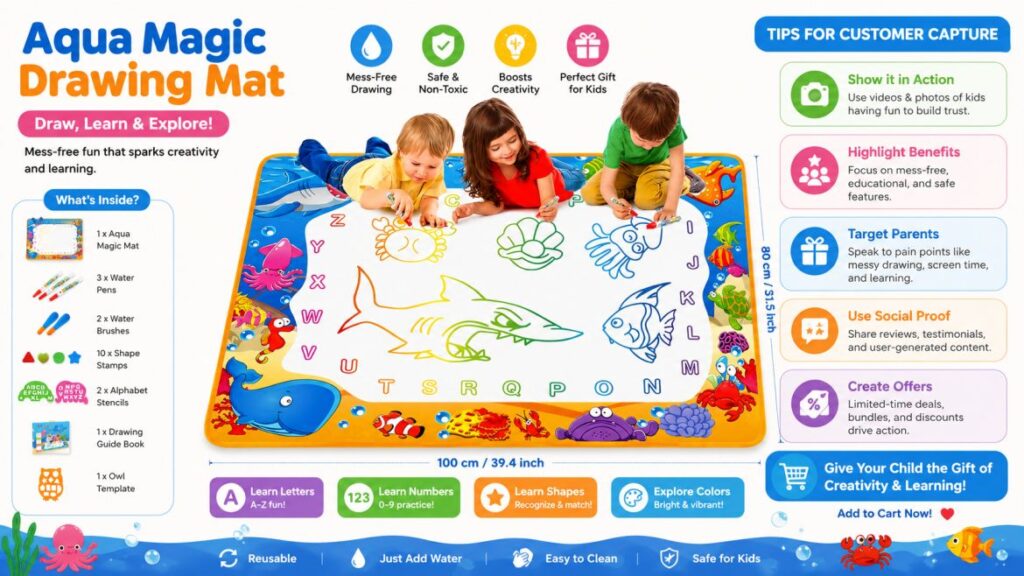
Do not underestimate fingerpaints. Among child development specialists, messy sensory art is considered one of the most powerful early learning experiences available. When a toddler squishes paint between their fingers, they are not just making a mess — they are processing texture, learning colour mixing, expressing emotion, and building the fine motor control that leads directly to handwriting.
Crayola’s washable formula is genuinely washable (parents who’ve been burned by non-washable paints will understand the relief). The colours are vivid and non-toxic, and the set is simple enough that a 12-month-old can engage meaningfully with supervision.
✅ Why parents love it
- Rich sensory experience builds neural pathways
- Truly washable — tested by 18,000+ parents
- 100% non-toxic, CE & ASTM certified
- Very affordable under $30
❌ Worth knowing
- Supervision always required
- Best done with a protective mat or outside
Parent Verdict: “Honestly the most fun my 18-month-old has had with any toy. And yes — it actually washes off the wall.” — David, dad of 2, USA
Learning Resources Counting Cubes Set
Age: 2 – 5 years
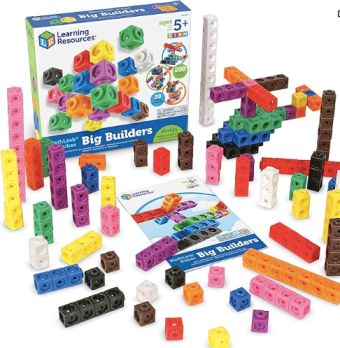
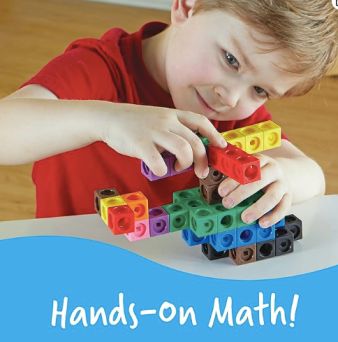
Maths anxiety starts early — and the best antidote is making numbers physical, colourful, and fun before children ever sit down in a classroom. These interlocking cubes let toddlers count, sort by colour, build patterns, and explore basic addition and subtraction with their hands before their brains are ready for abstract symbols.
Teachers and Montessori educators consistently rank manipulative maths tools as the single highest-impact early maths intervention available. These cubes are the affordable, home-friendly version of what the best preschools around the world use every day.
✅ Why parents love it
- Builds number sense before formal schooling
- 10 vivid colours — also teaches sorting & patterns
- Used in schools across USA & UK
- Robust, long-lasting plastic — dishwasher safe
❌ Worth knowing
- Small parts — not for under 18 months
- Need to store carefully to avoid losing pieces
Parent Verdict: “My son’s preschool teacher asked what we were doing at home — he was so ahead of the other kids with numbers. I told her: these cubes every evening.” — Aisha, mum of 2, UK
Touch & Teach Word Book
Age: 2 – 5 years
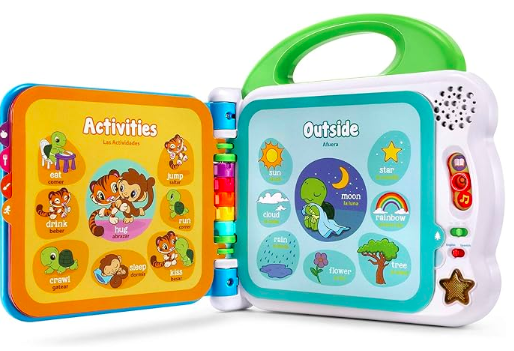
Language explosion happens between ages 2 and 4 — this is the window parents cannot afford to miss. Children in this window absorb vocabulary at an astonishing rate, and the quality of language they are exposed to during this period directly shapes their communication skills as adults. The VTech Touch & Teach Word Book makes language input interactive, self-directed, and endlessly repeatable — exactly what a toddler brain needs.
Children press pages, hear words pronounced clearly, see images, and engage with simple questions — building both vocabulary and early reading readiness simultaneously. Available in multiple languages, it is also a favourite for bilingual families across the USA, UK, and Arabic-speaking countries.
✅ Why parents love it
- Interactive — child-led learning pace
- Covers 100+ essential early words
- Available in multiple languages
- Volume control — parent sanity preserved
❌ Worth knowing
- Battery charging required
- Audio can feel repetitive for parents nearby
Parent Verdict: “My daughter learned to say about 40 new words in one month. She carries this book everywhere and asks us to sit with her — it is the sweetest thing.” — Omar, dad of 1, Saudi Arabia
Little Tikes Cozy Coupe Ride-On
Age: 1.5 – 4 years
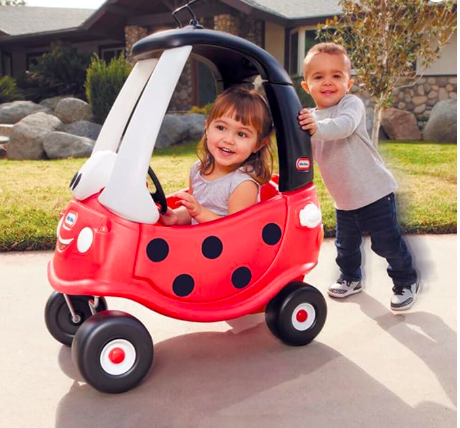
Physical development is educational development — especially in the toddler years. Gross motor skills, coordination, spatial awareness, and the confidence that comes from mastering physical challenges are all foundational cognitive assets. The Cozy Coupe has been a rite of passage for toddlers for over 40 years — and it still sells out every Christmas for good reason.
Children push themselves with their feet, learn steering and direction, engage in imaginative role play, and develop the core strength that helps them sit attentively in a classroom later on. Outdoor physical play also reduces cortisol levels — which means calmer, better-sleeping children for parents.
✅ Why parents love it
- Builds coordination, balance & strength
- Hours of imaginative outdoor play
- Iconic design — 40 years of proven quality
- Push bar for parents to guide young ones
❌ Worth knowing
- Large — needs outdoor space or big garden
- Assembly takes about 30 minutes
Parent Verdict: “My son would literally live in this car if I let him. It goes everywhere — garden, grandparents, the park. Absolute classic.” — Laura, mum of 3, UK
Kids First Science Lab Set
Age: 3 – 6 years
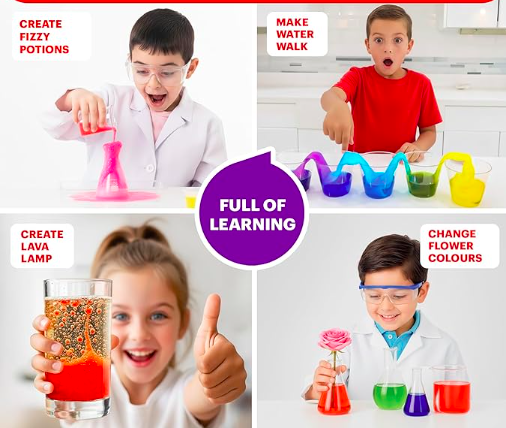
Curiosity is the engine of all learning. When a toddler asks “why?” — which they do approximately 300 times a day — that is a superpower, not an annoyance. The Science Lab gives that curiosity a structured outlet, with simple, safe experiments that introduce cause-and-effect thinking, observation skills, and the scientific method without a single word of boring theory.
Experiments include colour mixing, basic magnetism, floating and sinking, and simple chemistry with household-safe ingredients. Perfect for weekend activities with a parent — and the kind of memory that sticks with a child for life.
✅ Why parents love it
- 20+ simple, safe experiments included
- Builds scientific thinking from age 3
- Parent-child bonding activity
- Award-winning design (Toy of the Year finalist)
❌ Worth knowing
- Always requires adult supervision
- Some consumable materials need replacing
Parent Verdict: “We do one experiment every Saturday morning. My 4-year-old calls himself ‘the scientist’ now. This kit sparked something real in him.” — Michael, dad of 2, USA
Stacking Rainbow Wooden Rings
Age: 6 months – 3 years
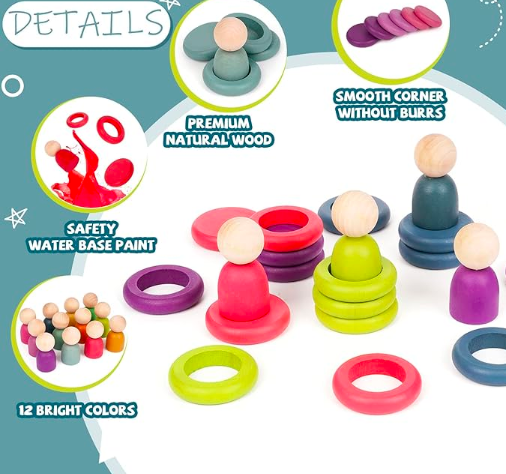
Sometimes the oldest toys are the best toys. The simple wooden stacking ring is one of the most research-backed infant and toddler learning tools in existence — and you can find excellent versions for under $30. Do not be fooled by the simplicity. A child fitting rings onto a post is practising size comparison, sequencing, colour recognition, hand-eye coordination, and the patience of repeated trial and error — all the foundations of a learning mindset.
The rainbow-coloured version adds colour recognition to the developmental checklist. Made from sustainable wood with non-toxic paint, these are also the kind of toy you feel good about giving your child.
✅ Why parents love it
- Safe from 6 months — no small parts
- Teaches size, sequence, colour & coordination
- Sustainable wood — eco-friendly choice
- Best value on this entire list — under $30
❌ Worth knowing
- Very simple — outgrown by age 3-5
- Quality varies by brand — buy from a reputable seller
Parent Verdict: “I have three kids and this was the first toy for all of them. Timeless, safe, and genuinely educational. Every new parent should own one.” — Nadia, mum of 3, UAE
4- Quick Comparison Table — All 10 Toys at a Glance
| # | Toy | Age | Buy On | Creative | Screen-Free | Budget-Friendly | Rating |
|---|---|---|---|---|---|---|---|
| 1 | LEGO DUPLO Brick Box | 18m–5y | Amazon | ✓ | ✓ | ✓ | 4.9 |
| 2 | Osmo Genius Starter Kit | 3–5y | Amazon | ✓ | ✗ | ✗ | 4.8 |
| 3 | Melissa & Doug Alphabet Puzzle | 2–4y | Amazon | ✓ | ✓ | ✓ | 4.8 |
| 4 | Kids Music Player | 3–8y | Amazon | ✓ | ✓ | ✗ | 4.7 |
| 5 | Fingerpaints Set | 1–3y | Amazon | ✓ | ✓ | ✓ | 4.7 |
| 6 | Learning Resources Counting Cubes | 2–5y | Amazon | ✓ | ✓ | ✓ | 4.8 |
| 7 | Touch & Teach Word Book | 2–5y | Amazon | ✗ | ✓ | ✓ | 4.6 |
| 8 | Little Tikes Cozy Coupe | 18m–4y | Amazon | ✓ | ✓ | ✗ | 4.9 |
| 9 | Science Lab | 3–6y | Amazon | ✓ | ✓ | ✗ | 4.7 |
| 10 | Wooden Rainbow Stacking Rings | 6m–3y | Amazon | ✓ | ✓ | ✓ | 4.8 |
5- Best Educational Toys by Age — What Does Your Child Actually Need Right Now?
What educational toys are best for babies aged 6–18 months?
At this stage, everything is about sensory input and motor development. The best choices are the wooden stacking rings, soft textured books, and simple cause-and-effect toys (press a button, something happens). Avoid anything with small parts or complex instructions — simplicity is the point.
What toys should a 2 year old have for learning?
Age two is when imagination, language, and physical coordination all explode simultaneously. This is LEGO DUPLO time, alphabet puzzle time, and fingerpaint time. Focus on toys that let your child lead their own play while you narrate what they’re doing — your words are the most powerful educational tool available at this age.
What is the best educational toy for a 5 year old getting ready for school?
At age 5, focus on school-readiness skills: letter recognition, number sense, listening comprehension, and the ability to sit with a task for 10–15 minutes. The Counting Cubes, and kids music Player all work beautifully here. Pair them with regular reading together and your child will walk into school already ahead.
One Warning From Child Development Experts
More toys does not mean more learning. Research consistently shows that children with fewer, higher-quality toys develop stronger imagination, deeper focus, and better problem-solving than children with rooms full of options. Choose 3–4 great toys over 20 average ones.
6- Frequently Asked Questions by Parents
A genuinely educational toy should target a specific developmental skill — fine motor control, language, spatial reasoning, numeracy, or social skills — and do so in a way that is backed by research, not just marketing. Look for toys that are used in schools or recommended by paediatric occupational therapists. If the only evidence of it being “educational” is text on the box, be sceptical.
How many educational toys does a toddler actually need?
Child development experts suggest 3–5 high-quality, open-ended toys are more beneficial than a large collection of single-purpose toys. Rotate them every few weeks to maintain novelty without overwhelming your child or your budget. A good rule: if your child cannot choose what to play with because there are too many options, you have too many toys.
Is screen time okay alongside educational toys in 2026?
The American Academy of Pediatrics recommends no screen time before 18 months (except video calls) and a maximum of one hour per day of high-quality programming for children aged 2–5. Educational toys should not replace screen time limits — they should complement a broader play environment that is mostly screen-free. Think of educational screen time as a seasoning, not the main ingredient.
Are expensive educational toys better than cheap ones?
Not necessarily. The wooden stacking rings on this list cost under $15 and are among the most developmentally powerful toys available. Price can sometimes indicate quality of materials — and with toddlers, safe, non-toxic materials matter enormously — but the most important factor is always developmental appropriateness, not price tag.
Our Final Verdict — What to Actually Buy
After reviewing 60+ products and applying genuine child development criteria, here is the honest summary for busy parents who just want to make the right call:
🥇 Best Overall
🔬 Best for STEM
💰 Best Budget
📵 Best Screen-Free
🌿 Best Montessori
Melissa & Doug Alphabet Puzzle
The Most Important Thing This Article Can Tell You
No toy — however brilliant — replaces you. The research is unambiguous: children develop fastest when a caring adult plays alongside them, narrates what they are doing, asks questions, and celebrates their efforts. The best toy in the world is a starting point. You are the real educational tool. These toys just give you something wonderful to do together.
👩💻
Written by the Kids Learning Fw.more Team
Our team of parent writers, early childhood educators, and child development researchers reviews products with one goal: honest guidance that helps real families make confident decisions. We do not accept sponsored placements — every recommendation is independently chosen based on developmental merit.
Disclaimer: This article is intended for informational purposes only. Always supervise toddlers during play and follow age recommendations on toy packaging.
© 2026 fw.more Kids Learning Guide ·